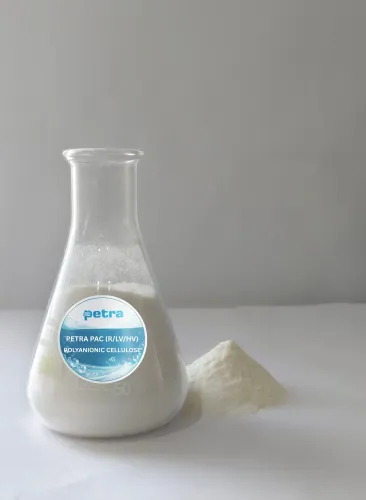
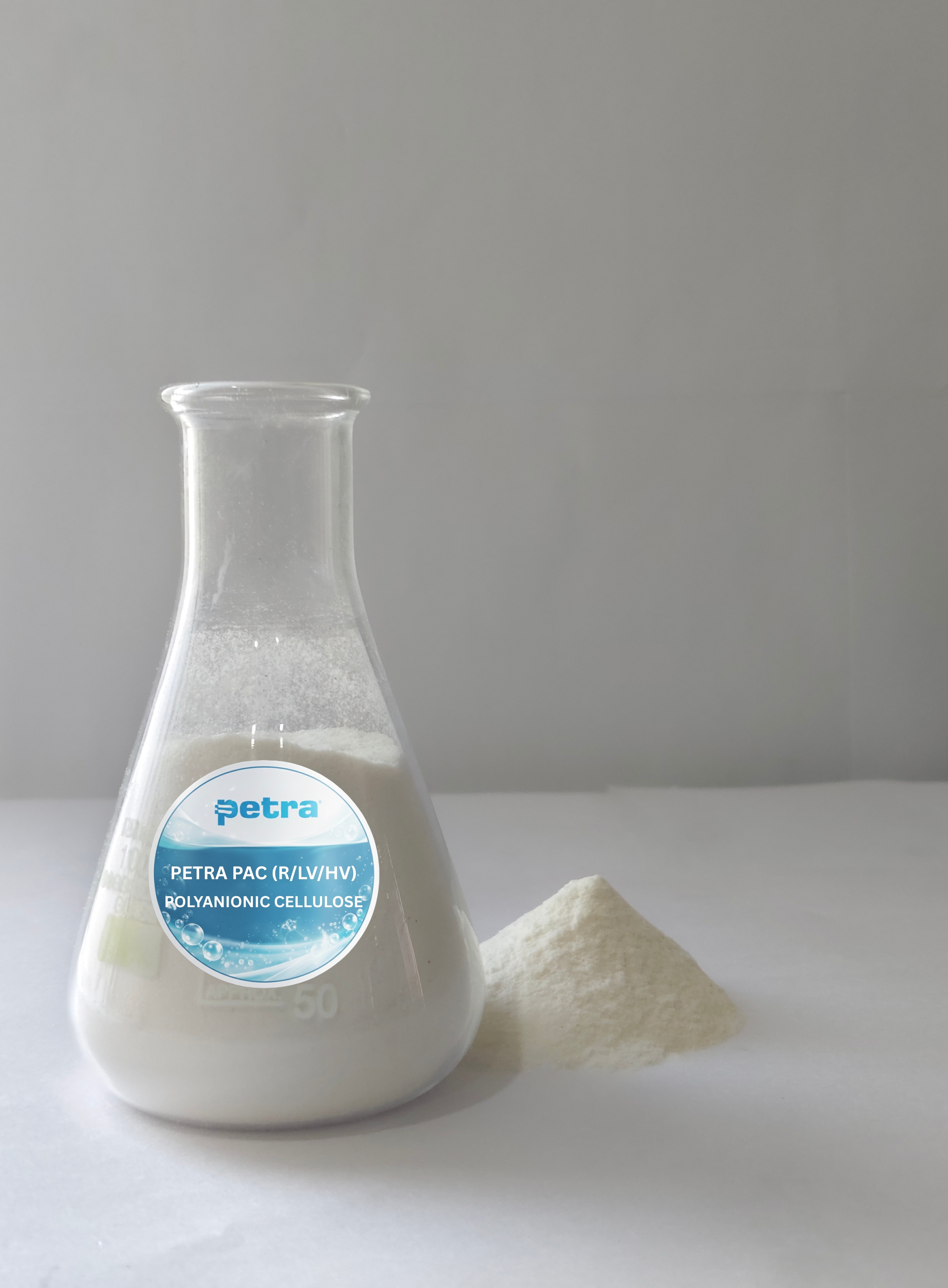
PAC-LV is a water-soluble polymer primarily used in water-based drilling fluids to control fluid loss and reduce filtrate invasion into permeable formations, with minimal increase in mud viscosity. PAC-LV is a water-soluble drilling-fluid additive used mainly for fluid-loss control and thin filter-cake formation with minimal viscosity increase.
Main uses in drilling
i)Controls fluid loss and filtration.
ii)Forms a thin, low-permeability filter cake.
iii)Helps protect formation integrity.
iv)Maintains fluid properties with minimal viscosity increase.
v)Suitable for freshwater and compatible saline-water drilling muds.
Advantages
i)Fluid-loss control: Reduces filtrate loss into formations.
ii)Thin filter cake: Helps form a thin, low-permeability filter cake.
iii)Low viscosity impact: Controls filtration with minimal increase in mud viscosity.
iv)Wellbore protection: Helps reduce formation damage caused by filtrate invasion.
v)Solubility: Easily dispersible in water-based drilling fluids when properly mixed.
vi)Salt tolerance: Suitable for many saline mud systems, depending on grade and salinity.
vii)Mud stability: Helps maintain consistent drilling-fluid filtration properties.
FAQ:
Q1. What is PAC-LV in drilling fluids?
Answer: PAC-LV is a water-soluble polymer used mainly to control fluid loss in water-based drilling muds with minimal viscosity increase.
Q2. What is the main function of PAC-LV?
Answer: It reduces filtrate loss and helps form a thin, low-permeability filter cake.
Q3. What are the main advantages of PAC-LV?
Answer: Effective fluid-loss control, minimal viscosity increase, and improved filtration management.
Q4. Is PAC-LV water-soluble?
Answer: Yes, PAC-LV is generally water-soluble and is used in water-based drilling fluids.
Q5. What is the difference between PAC-LV and PAC-HV?
Answer: PAC-LV primarily controls fluid loss with minimal viscosity increase, whereas PAC-HV provides greater viscosity enhancement along with fluid-loss control.
Q6. How does PAC-LV protect the formation?
Answer: It reduces filtrate invasion into permeable formations, helping limit formation damage.
Q7. Which drilling fluids use PAC-LV?
Answer: It is mainly used in freshwater and compatible saline water-based mud systems.
Q8. How is PAC-LV performance evaluated?
Answer: Common tests include API fluid-loss testing, rheology measurements, and filter-cake thickness evaluation.
Q9. Does PAC-LV increase mud viscosity?
Answer: It can increase viscosity slightly, but it is designed to provide fluid-loss control with less viscosity increase than PAC-HV.
Q10. What factors affect PAC-LV performance?
Answer: Dosage, salinity, temperature, pH, mixing conditions, and compatibility with other drilling-fluid additives.