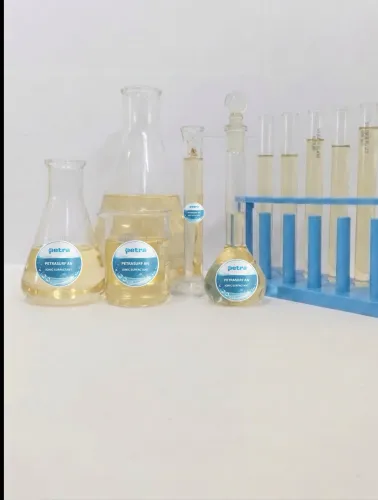
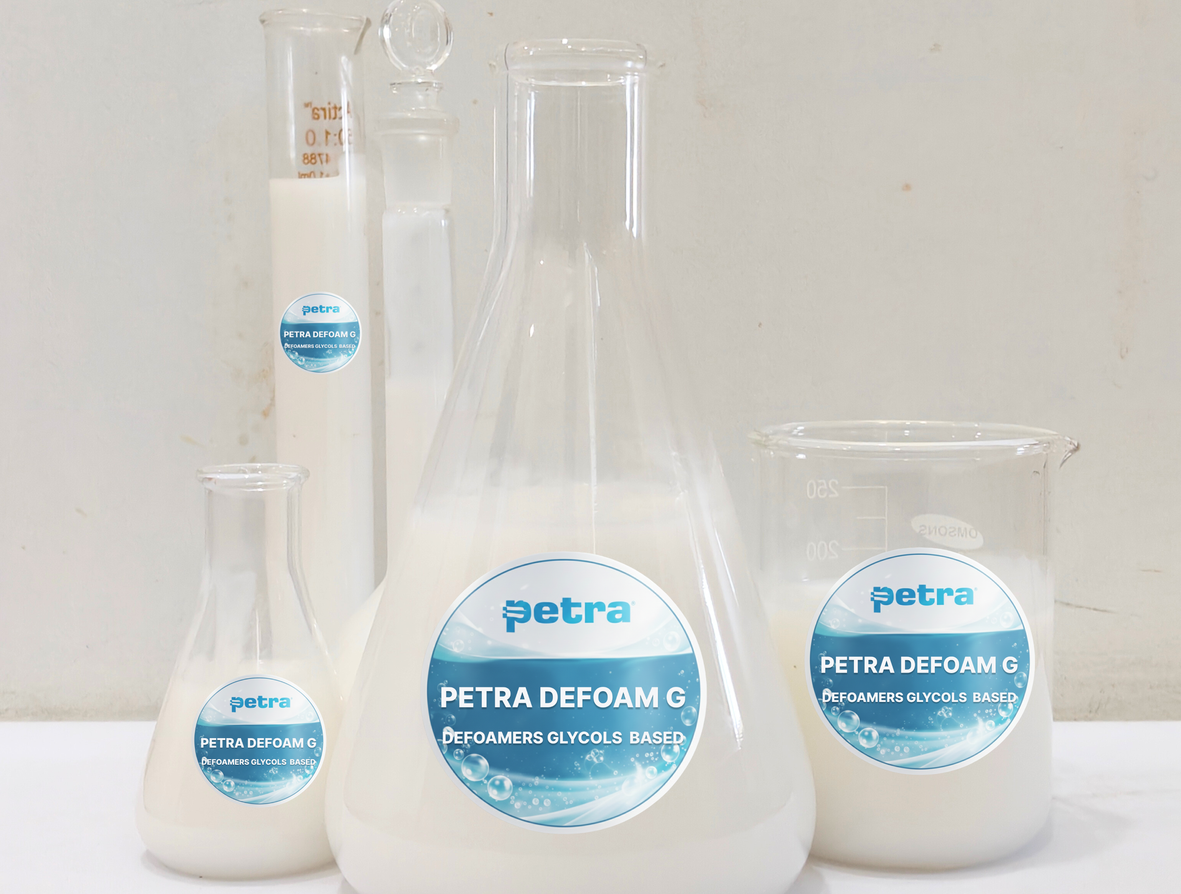
Glycol-based defoamers are specialized chemical additives used in oil and gas drilling to control foam, release entrained air, and lower surface tension in water-based drilling fluids
Glycol-based defoamer is an antifoaming additive used to control and suppress unwanted foam in drilling fluids, particularly water-based mud systems. It helps destabilize foam bubbles and maintain smooth mud handling and circulation.
Glycol-based defoamer is a glycol-containing antifoaming additive used in drilling fluids to control and suppress unwanted foam. It works by destabilizing foam bubbles and reducing surface foam formation.
Glycol-based defoamer is a non-silicone antifoaming agent used to reduce and prevent foam in drilling fluids. It helps destabilize foam bubbles and maintain smooth fluid circulation.
Main Uses in drilling
i)Controls foam generated during mud preparation and circulation.
ii)Reduces air entrainment in drilling fluids.
iii)Helps maintain accurate mud density and volume measurements.
iv)Improves mud mixing and pumping efficiency.
v)Reduces foam accumulation in mud tanks and surface equipment.
vi)Helps maintain consistent rheological and filtration testing.
vii)Useful in drilling fluids containing polymers, surfactants, and other foam-producing additives.
ix)Helps improve overall drilling-fluid handling and stability.
Advantages
i)Effective foam control during mud mixing and circulation.
ii)Helps reduce air entrainment in drilling fluids.
iii)Improves mud handling and pumping efficiency.
iv)Helps maintain accurate mud density and volume measurements.
v)Supports more consistent rheology and filtration testing.
vi)Reduces foam accumulation in mud tanks and surface equipment.
vii)Suitable for water-based drilling-fluid systems.
viii)Useful for formulations where a non-silicone defoamer is preferred.
ix)Generally effective at controlled/low dosage, depending on the formulation.
x)Helps improve overall drilling-fluid operational stability.
FAQ:
Q1. What is a glycol-based defoamer used for in drilling fluids?
Answer: It is mainly used to control and suppress unwanted foam during mud mixing, circulation, and surface handling.
Q2. How does a glycol-based defoamer work?
Answer: It reduces foam stability by interacting with the foam film, causing bubbles to break and collapse.
Q3. What is the main advantage of glycol-based defoamer?
Answer: It provides effective foam control without using silicone, making it useful where silicone-free formulations are preferred.
Q4. What problems can excessive foam cause in drilling mud?
Answer: Excessive foam can cause air entrainment, inaccurate density readings, poor pumping efficiency, and difficulties in surface handling.
Q5. Where is glycol-based defoamer commonly used?
Answer: It is commonly used in water-based drilling fluids, particularly systems containing polymers, surfactants, or other foam-producing additives.
Q6. How does it help with mud testing?
Answer: By reducing entrained air and foam, it helps improve the reliability of mud-density, rheology, and filtration measurements.
Q7. What factors determine the dosage of glycol-based defoamer?
Answer: Dosage depends on foam severity, mud composition, temperature, salinity, and compatibility with other additives. The optimum dosage should be established by laboratory testing.